


GOOGLE said on Friday it has made 'more than a dozen technical improvements' to its artificial intelligence (AI) systems after its retooled search engine was found spitting out erroneous information.
GOOGLE said on Friday it has made 'more than a dozen technical improvements' to its artificial intelligence systems after its retooled search engine was found spitting out erroneous information.The tech company unleashed a makeover of its search engine in mid-May that frequently provides AI-generated summaries on top of search results.
Soon after, social media users began sharing screenshots of its most outlandish answers.Google has largely defended its AI overviews feature, saying it is typically accurate and was tested extensively beforehand. But Liz Reid, the head of Google's search business, acknowledged in a blog post Friday that 'some odd, inaccurate or unhelpful AI Overviews certainly did show up.'While many of the examples were silly, others were dangerous or harmful falsehoods. Adding to the furor, some people also made faked screenshots purporting to show even more ridiculous answers that Google never generated. A few of those fakes were also widely shared on social media.The Associated Press last week asked Google about which wild mushrooms to eat, and it responded with a lengthy AI-generated summary that was mostly technically correct, but 'a lot of information is missing that could have the potential to be sickening or even fatal,' said Mary Catherine Aime, a professor of mycology and botany at Purdue University, who reviewed Google's response to AP's query.For example, information about mushrooms known as puffballs was 'more or less correct,' she said, but Google's overview emphasized looking for those with solid white flesh — which many potentially deadly puffball mimics also have.In another widely shared example, an AI researcher asked Google how many Muslims have been president of the United States, and it responded confidently with a long-debunked conspiracy theory: 'The United States has had one Muslim president, Barack Hussein Obama.'Google last week made an immediate fix to prevent a repeat of the Obama error because it violated the company's content policies.In other cases, Reid said on Friday that it has sought to make broader improvements such as better detection of 'nonsensical queries' — for example, 'How many rocks should I eat?' — that shouldn't be answered with an AI summary.The AI systems were also updated to limit the use of user-generated content that could offer misleading advice. In one widely shared example, Google's AI overview last week pulled from a satirical Reddit comment to suggest using glue to get cheese to stick to pizza.Reid said the company has also added more 'triggering restrictions' to improve the quality of answers to certain queries, such as about health.But it is not clear how that works and in which circumstances. On Friday, the AP again asked Google about which wild mushrooms to eat. AI-generated answers are inherently random, and the newer response was different but still 'problematic,' said Aime, the Purdue mushroom expert, who is also president of the Mycological Society of America.For example, saying that 'Chanterelles look like seashells or flowers is not true,' she said.Google's summaries are designed to get people authoritative answers to the information they are looking for as quickly as possible without having to click through a ranked list of website links.But some AI experts have long warned Google against ceding its search results to AI-generated answers that could perpetuate bias and misinformation, and endanger people looking for help in an emergency. AI systems known as large language models work by predicting what words would best answer the questions asked of them based on the data they have been trained on. They're prone to making things up — a widely studied problem known as hallucination.In her Friday blog post, Reid argued that Google's AI overviews 'generally don't 'hallucinate' or make things up in the ways that other' large language model-based products might because they are more closely integrated with Google's traditional search engine in only showing what's backed up by top web results.'When AI Overviews get it wrong, it's usually for other reasons: misinterpreting queries, misinterpreting a nuance of language on the web, or not having a lot of great information available,' she wrote.
Philippines Latest News, Philippines Headlines
Similar News:You can also read news stories similar to this one that we have collected from other news sources.
 Google, DTI 4A team up to offer digital trainingDefining the News
Read more »
 The new, old Google Search: udm14.comWith all the brouhaha of getting AI to do the searching for you, Google cannot be left behind by Microsoft and OpenAI AI-based search engines. Google announced and released its own AI-powered Google Search at Google I/O.
Read more »
 Google confirms leak of search algorithm documentation, adds it lacks contextThe details surrounding the documents are first discussed by search engine optimization experts Rand Fishkin and Mike King, with both noting how some of the information contradicted public statements about Google's search
Read more »
 Google to invest $2 billion in MalaysiaKUALA LUMPUR — Google plans to invest $2 billion in Malaysia, developing its first data center and a Google Cloud hub in the latest big foray by a US tech giant in the Southeast Asian country.
Read more »
 Luzon grid under yellow alert anew on Friday afternoonLatest Philippine news from GMA News and 24 Oras. News, weather updates and livestreaming on Philippine politics, regions, showbiz, lifestyle, science and tech.
Read more »
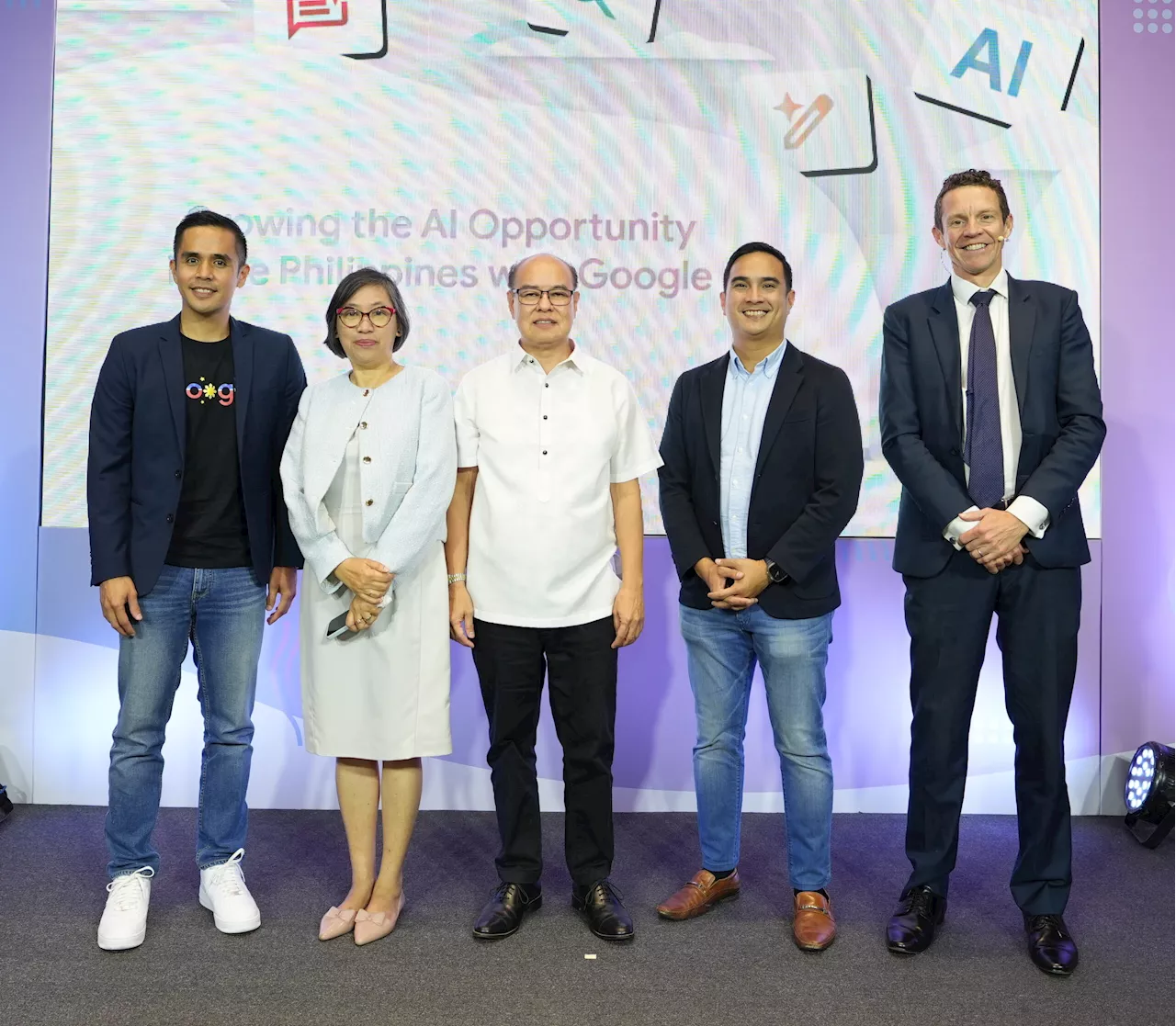 Google launches AI Essentials’ skilling program to support PH in building AI-ready workforceDefining the News
Read more »