
THE recent push to remove Art Appreciation, Ethics and The Contemporary World from college curriculums signals a dangerous drift toward a labor- and employment-centric model of education. This neoliberal restructuring in education sacrifices critical thinking, creativity and civic awareness for perceived economic efficiency.
THE recent push to remove Art Appreciation, Ethics and The Contemporary World from college curriculums signals a dangerous drift toward a labor- and employment-centric model of education. This neoliberal restructuring in education sacrifices critical thinking, creativity and civic awareness for perceived economic efficiency.
Hence, this is to reaffirm the essential role and enduring value of these liberal arts courses in shaping well-rounded, responsible citizens.Article 2, Section 17 of the 1987 Constitution states that education shall foster patriotism and nationalism, accelerate social progress, and promote total human liberation and development. The Commission on Higher Education Memorandum Order 20, Series of 2013 also states that the primary goals of General Education are to produce graduates with a humanistic orientation, strong analytical and problem-solving skills, awareness of ethical and social implications, and the capacity to live meaningfully in a complex, rapidly changing and globalized world.Ultimately, higher education is not only about gaining expertise in a specific field but also about shaping well-rounded individuals who possess a broad appreciation of knowledge, open-mindedness, an understanding of their identity as Filipinos and a deep awareness of their role in society. Hence, the goals and context of General Education emphasize that its primary objective is to lay the foundation for the development of humane, morally upright and professionally competent individuals who are equipped to meet the demands of 21st-century life. This is achieved through holistic development that fosters adaptability, creativity and problem-solving skills.The Second Congressional Commission on Education reported that Philippine college programs overemphasize GE courses while lacking practical training like internships. This imbalance, described as “GE-heavy, internship-light,” stems from the excessive GE units, which surpass international norms. EdCom 2 recommended shifting some GE subjects to the senior high school level to reduce redundancy and academic load in college. In line with this, the Department of Education proposed removing three GE courses — Art Appreciation, Ethics and The Contemporary World — from the college curriculum, arguing these are already covered in Grades 7 to 12. DepEd contends that removing these overlapping subjects could shorten college education by at least one semester.Neoliberal restructuringGiven these recent developments, it appears that the trajectory of the Philippine higher education curriculum is gearing toward a neoliberal restructuring of GE courses. The proposed decongestion of GE subjects may undermine the future of liberal arts education at the tertiary level. This shift also echoes the concern raised by Professor David Michael San Juan of De La Salle University regarding the “adjunctivization,” or retrenchment of faculty members in higher education, especially since many GE subjects have already been downloaded to the SHS curriculum with the advent of the implementation of the Kindergarten to Grade 12 program.The proposed transferring of GE courses to the basic education level also raises critical concerns about faculty competence, particularly in terms of qualifications and the ability to teach subjects that are conceptually broad, highly technical and theoretical. Such subjects demand not only technological and pedagogical competence but also require a strong foundational content knowledge. Hence, senior high school teachers who will be expected to deliver these courses must be equipped with sufficient academic depth to uphold the intellectual rigor originally intended at the tertiary level.The late National Artist for Literature Bienvenido Lumbera argued that the root problem of the Philippine education system lies in its neoliberal orientation, which promotes privatization and deregulation, making it increasingly difficult for families to access quality education for their children. Within this framework, education is treated as a market commodity and schools function as businesses that operate according to market demands. University graduates are likened to a factory of workers, expected to either serve capitalist interests or become part of the overseas cheap labor force.Moreover, neoliberal rhetoric emphasizes individualism, thereby weakening national welfare and collective responsibility. This orientation instills in students the belief that education is primarily a means for personal advancement and global competitiveness, rather than a tool for national development. As a result, such an approach reinforces colonial mentality and individualistic ideologies, ultimately diminishing nationalist consciousness among the youth and students.Lumbera further argued that the neoliberal orientation of the education system fosters uncritical and blind obedience. This orientation conditions students to become passive servants of who follow orders without question. Such a system discourages critical thinking, especially when education is reduced to a profit-driven enterprise rather than a tool for emancipation and national development.The current trajectory of the Philippine higher education curriculum — particularly the proposal to remove the three aforementioned GE courses — reflects a neoliberal agenda aimed at shortening the duration of college education to expedite employment and provide immediate economic relief to families. In retrospect, this move risks gutting the very heart of liberal arts education, particularly as embodied in GE courses such as Art Appreciation, Ethics and The Contemporary World, which are essential in cultivating holistically developed, well-rounded individuals. The removal of these courses risks compromising this objective by narrowing the educational experience to utilitarian ends.In “Mathematics and the Liberal Arts,” Fidel Nemenzo underscored the enduring value of GE at the University of the Philippines , rooted in the liberal arts tradition. Drawing from the American model, he emphasized GE’s role in shaping well-rounded individuals with critical thinking skills, interdisciplinary understanding and a strong social conscience. At UP, the GE program fosters critical analysis, ethical discernment and a deep sense of nationhood.Nemenzo argued that students must engage diverse perspectives and take principled stands. He warned against narrow specialization, advocating for a broad-based education that connects disciplines and promotes social responsibility. Even in fields like mathematics, including the other fields, the liberal arts education fosters appreciation of knowledge as both a tool and a means to understand, and how it shapes the world.Through this example, the purpose of liberal arts education can only be realized in the hope that the objectives of Philippine higher education will not be restructured into a neoliberal agenda, but in fostering a “liberating” GE courses — such as reinforced through Art Appreciation, Ethics and The Contemporary World. In today’s fast-paced world of work — particularly within the context of a “hustle culture” that glorifies constant busyness — the Art Appreciation course provides a necessary space to pause, reflect and engage one’s creative faculties. It encourages students to see the world differently through artistic expression and fosters mindfulness and aesthetic awareness. In a society fraught with personal and social challenges, Ethics equips students with the capacity for informed, principled and reflective decision-making amid complex moral dilemmas. And in an era marked by global crises, conflicts and uncertainties, The Contemporary World enables learners to examine current issues through theoretical, personal and social perspectives, on how to navigate and take part in the world as part of the international community as global citizens.To remove these courses in the GE program is to rob our youth of the chance to think deeply, act ethically and see beauty in a complex world. We must not let our education system trade liberation only for labor. Therefore, it is imperative to defend the retention of these courses as they are essential in fulfilling the aims of liberal arts education — particularly in shaping well-rounded individuals through holistic intellectual, moral and civic development. In doing so, we can have a restructured education that is truly transformative, empowering and liberating.Joseph D. Ramiscal is a faculty member at the University of Makati, where he teaches General Education courses in social sciences, philosophy and humanities.
Liberating General Education Program
Philippines Latest News, Philippines Headlines
Similar News:You can also read news stories similar to this one that we have collected from other news sources.
 Toward sustainability“This aligns with the government’s commitment to building resilient and sustainable infrastructure” AS AN organization advocating for environment
Read more »
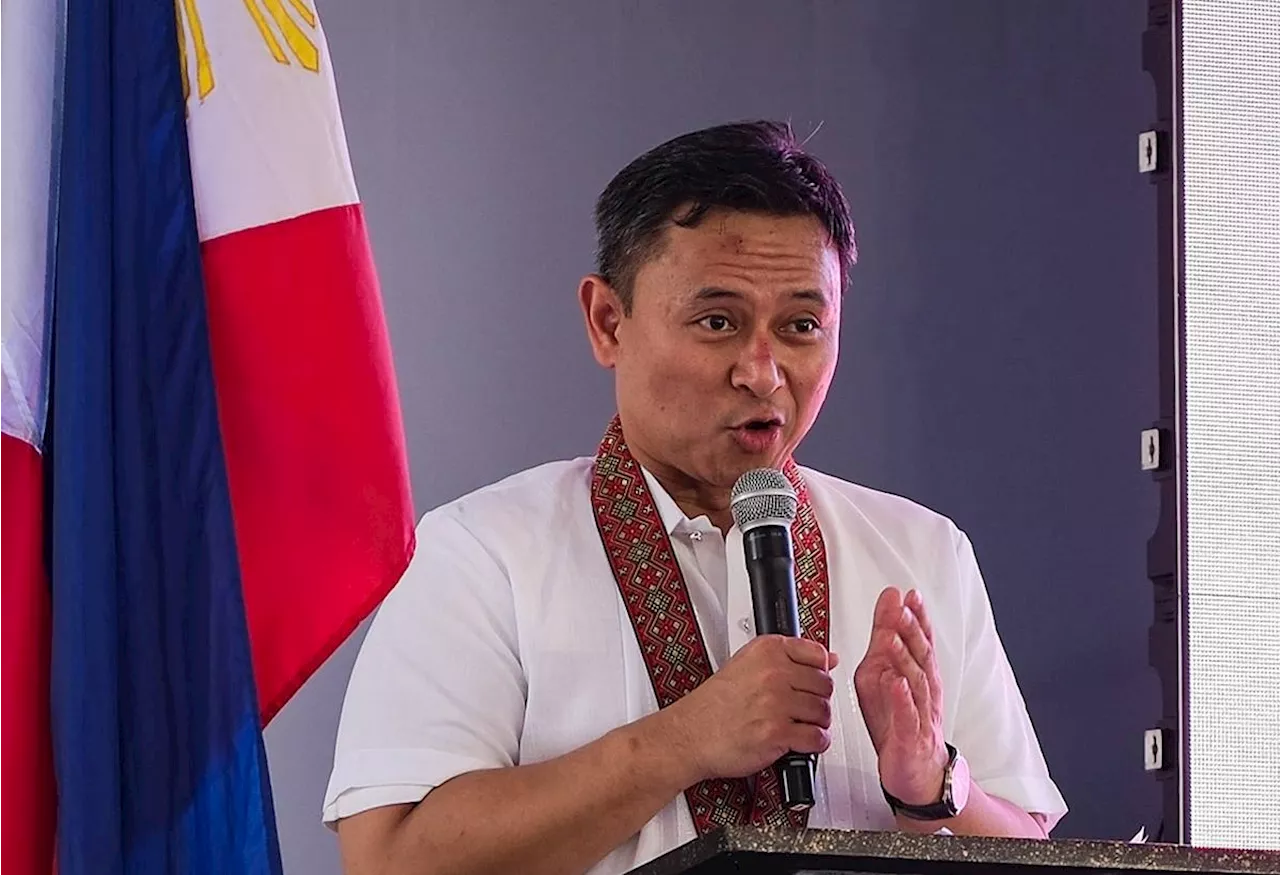 Groups support Angara, BenitezA NUMBER of private education groups have expressed support for Education Secretary Sonny Angara, and Technical Education and Skills Development Authority Director General Jose Francisco Benitez, saying the two officials have brought about an unprecedented level of coordination and collaboration between their respective agencies.
Read more »
 Higher Education chief, solicitor general out; Reclamation chairman first GOCC head to resignMANILA, Philippines — President Ferdinand Marcos Jr. has accepted the courtesy resignation of Commission on Higher Education (CHEd) Chairman Prospero De Vera III, Executive Secretary Lucas Bersamin announced on Thursday.
Read more »
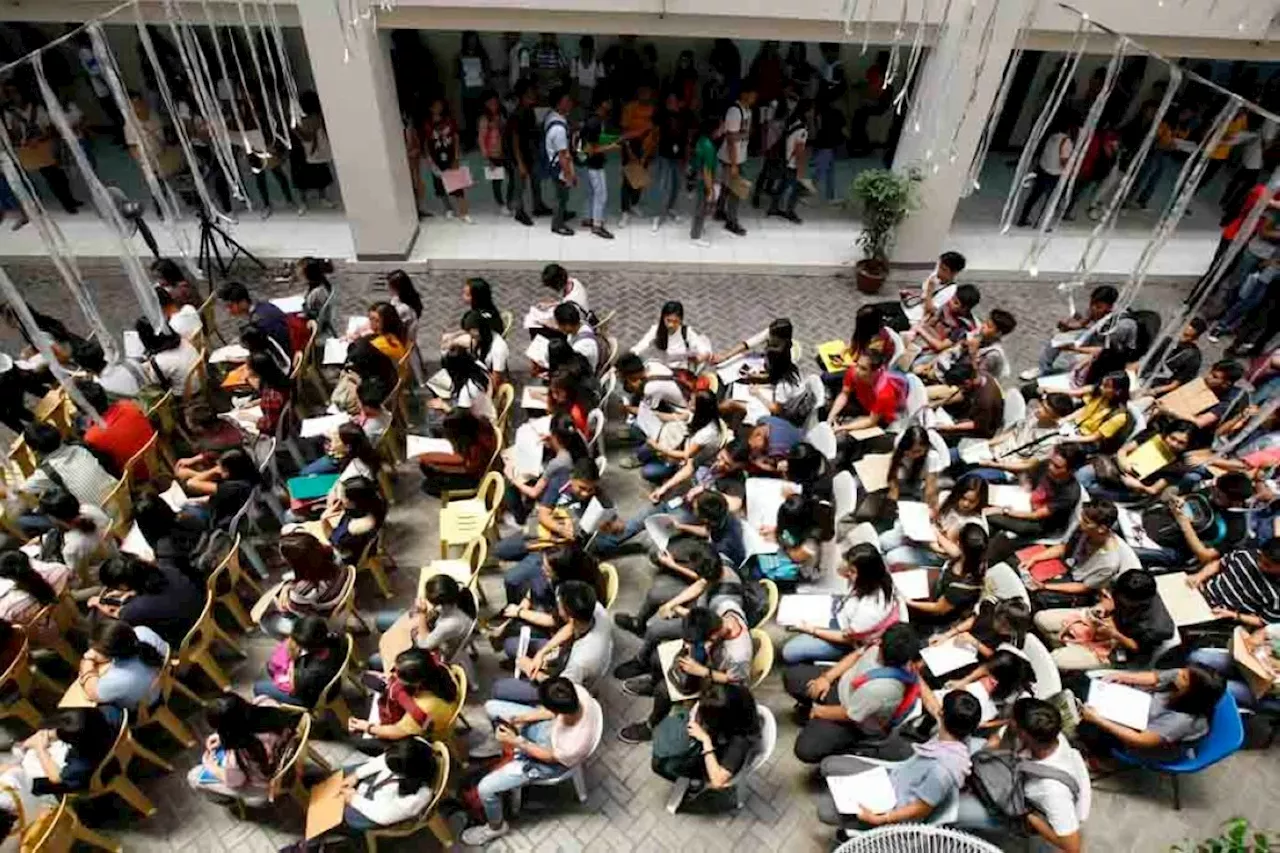 College courses in the Philippines: Too much General Education, not enough practical trainingWith Philippine college programs weighed down by an excessive number of general education (GE) courses and lacking sufficient hands-on training and internships,...
Read more »
 Pivoting toward AI-powered, job-ready education: challenges and prospectsARTIFICIAL intelligence (AI), one of the most transformative technologies in recent history, is changing the world as fast as ever — not just in major industries but even in the daily aspects of life.
Read more »
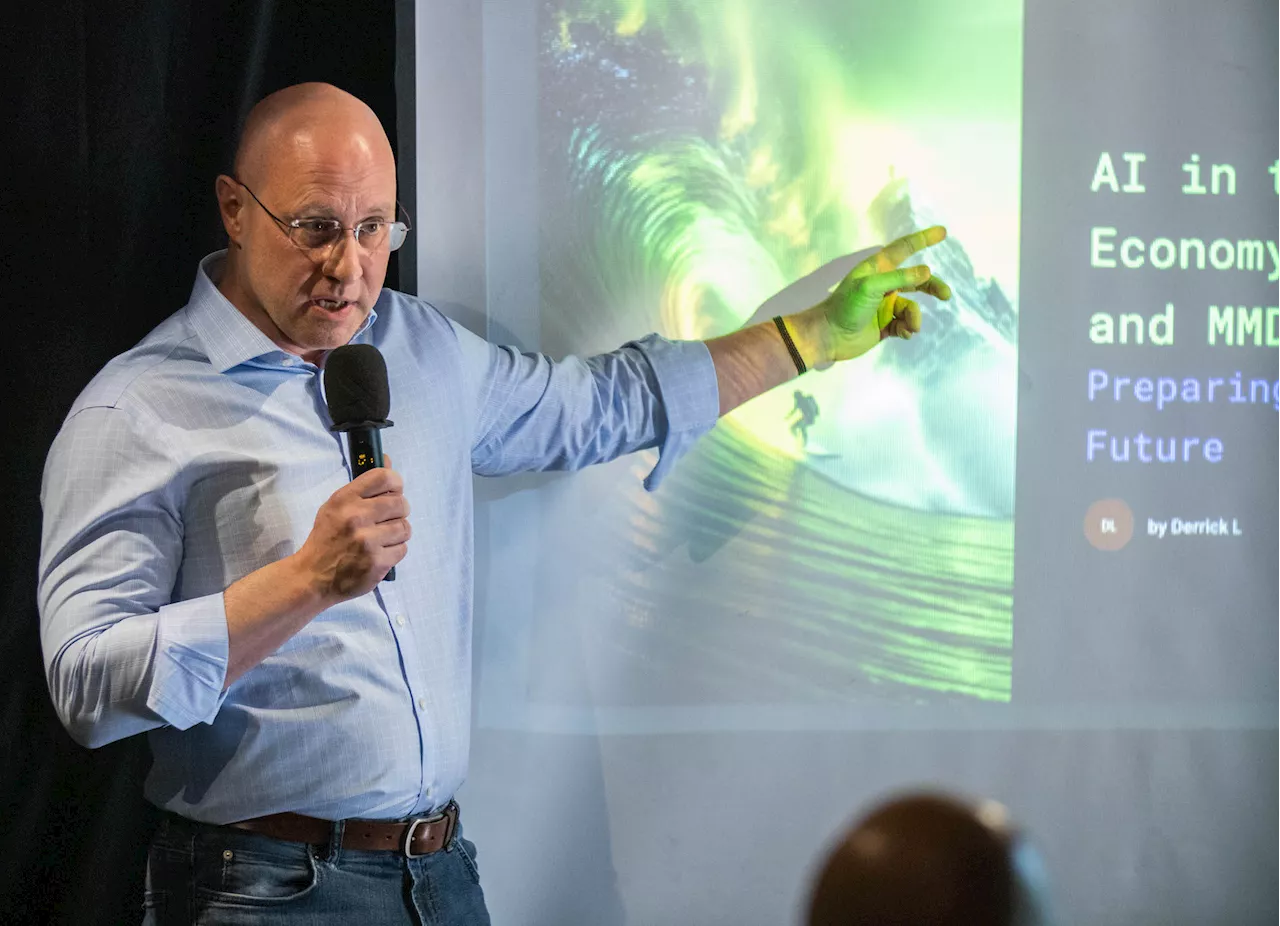 AI revolution: Mapúa Malayan Digital College leads shift toward AI-powered, job-ready education in PHArtificial intelligence (AI), one of the most transformative technologies in recent history, is changing the world as fast as ever not just in major
Read more »