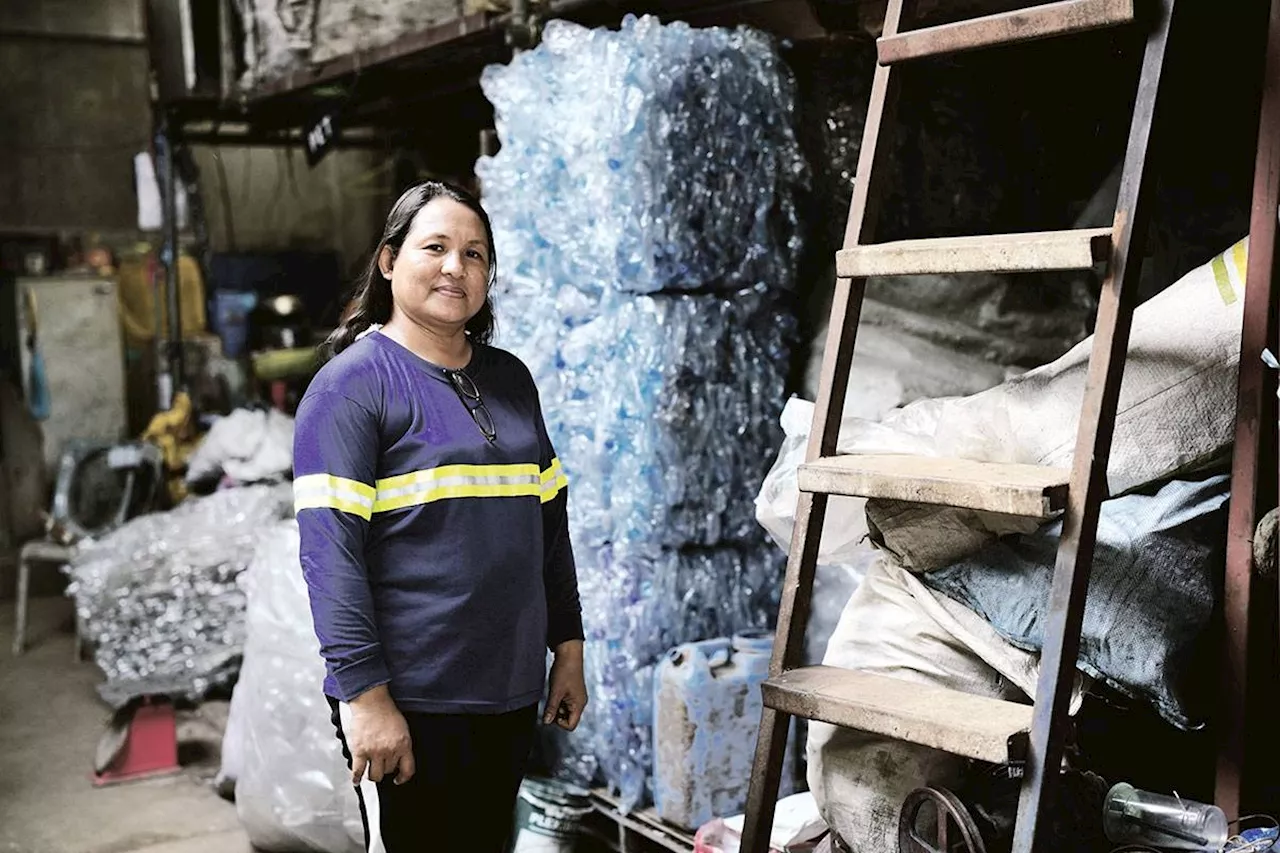
DURING the past 10 years, Canadian-based company Plastic Bank has removed globally from the environment about 8.2 billion bottles and collected 162 million kilograms (kg) of plastic.
DURING the past 10 years, Canadian-based company Plastic Bank has removed globally from the environment about 8.2 billion bottles and collected 162 million kilograms of plastic. Jennifer Arcilla, founder of Jecka Collection Branch.
PHOTOS FROM THE PLASTIC BANK Of that number, about 1.7 billion bottles or 35 million kg of plastic were sourced from the Philippines. Plastic Bank buys the collected waste from individuals, public schools, collection centers and other companies for about P10 to P15 per kg of plastic which are mainly either single-use plastic or multiuse plastic. Then recycling facilities reprocess all the gathered plastic into recycled plastic feedstock and reintroduce them to the international manufacturing supply chain for reuse. Plastic Bank's sales agents, based in Europe and North America, find partners who will buy and use the material for packaging or to make other products. One example is contact lens creator CooperVision. This process, designed to ensure a win-win solution for the supply chain's stakeholders, differentiates Plastic Bank from an NGO. Julina Tanda, a collection community member from General Trias, Cavite. During the event that the company co-hosted with the Canadian Chamber of Commerce on May 21, Plastic Bank Philippines country manager Rene Guarin acknowledged that the company is ' ... a business. We call ourselves a social fintech .' Its operations include 'linking plastic collection from companies to collection branches, material-specific collection to supply feedstock for recycled plastic packaging, and retail and consumer engagement toolkits that brands can use at their consumer touchpoints.' Technology enables Plastic Bank to keep track of the process, transactions and the beneficiaries, especially the informal waste collectors who have opportunities to increase their income. According to Plastic Bank CEO and founder David Katz, 'We manage the integrity of the transaction chain.' The Plastic Bank app, which is free to download, intends to make the process simpler while creating a larger sense of community. Collectors, businesses and aggregators who register as members can record and manage the volume of plastics they have collected or sold. Individuals and organizations can reach out to junk shops connected with Plastic Bank. 'The material we collect we do sell to the larger brands of the world,' said Katz. At the same time, Katz is always conscious of the collectors and other processing partners who provide the plastic waste. He called them 'an integral part of what we do because they receive the material that adds value to the country' that can translate into dollar-earning exports. Through the app, informal waste collectors can access payments made to them along with the other Plastic Bank benefits like plastic credits exchanged for groceries and school supplies. Perhaps what matters most to Katz and his team is the economic transformation that the underserved communities are experiencing in the Plastic Bank ecosystem. Street sweepers like Elizabeth Ampuyas from Tondo and Julina Tanda from Cavite earn extra income through the plastic they collect. Edna Ablazo from Laguna helps feed her five children through the grocery vouchers she receives. Jennifer Arcilla employs a majority women team in operating her collection business. Epiphanies Katz's 'compassionate' approach in business stemmed from a life-changing realization: a huge part of the waste that was degrading the ocean came from areas most affected by poverty. A couple of epiphanies spurred him to create the Plastic Bank in 2013. The first was seeing images of Midway Island's dying albatrosses with bellies stuffed with plastic which Katz said 'they could not distinguish from food.' The second happened when he was looking down at the 'devastation' of trash that was lurking under the waters of Ocean Park Manila. What also propelled him was a vision that the plastic trash that was destroying the planet and harming its life forms could be converted into a value like cash. The underserved 'have no other option than to discard that material,' went his reasoning. 'But what if it was money for all humanity and actually helped end suffering? What if it brought medical care, vision care, education, clean water, food? What if it actually became humanity's greatest opportunity?' Plastic Bank CEO and founder David Katz; and Plastic Bank Philippines country manager Rene Guarin. Since its establishment in Canada, Plastic Bank has been operating in Brazil, Cameroon, Egypt, Indonesia and Thailand, aside from the Philippines. The numbers suggest a huge participation by our country which has more than 260 active collection branches out of the company's 700 worldwide. Out of Plastic Bank's 58,000 international collection members, 22,900 are Philippine-based. Plastic Bank has also forged partnerships with private corporations and local government units in places like Naga City and General Trias. Moving forward, Katz wants to set up operations in Nigeria. He envisions creating a program where, for example, 'buyers in Kansas City find someone in Quezon' who has the plastic material they need. 'This is to build prosperity,' he said. 'We recognize that if we can build and grow our business, we can grow the impact — we can grow change.'
Plastic From Pollution Into Prosperity
Philippines Latest News, Philippines Headlines
Similar News:You can also read news stories similar to this one that we have collected from other news sources.
 Empowering workplaces to be part of plastic pollution solutionAs the world honors Earth Day on April 22 and with the impact posed by climate change now closer to home, more people are realizing that celebrating the planet—and saving it—isn't only for a day but an ongoing collective initiative.
Read more »
 Answering 10 pressing questions about plastic pollution(First of 3 parts) The world generated an estimated 400 million tons of plastic waste last year. This torrent of water and shampoo bottles, dispensing
Read more »
 PepsiCo continues plastic waste diversion with Loop Lokal programPEPSICO continues to proactively find solutions to address plastic waste and invest in solutions that benefit communities and the environment.
Read more »
 Plastic substance leads to heart disease–studyDAVAO CITY—A substance used in the production of plastic has been found to contribute to heart ailment, the environmental group Greenpeace Philippines said, citing a New York study released recently.
Read more »
 How Plastic Bank uplifts the lives of waste collectors, protects the environmentPLASTIC Bank is a social fintech with a global plastic bottle deposit program that helps end poverty and stop plastic pollution. Every bottle collected prevents plastic waste from polluting the oceans and land, protecting ecosystems and wildlife.
Read more »
 Social fintech firm Plastic Bank believes solving plastic pollution, poverty go hand in handSince Plastic Bank began operations 11 years ago, the company has collected 8.1 billion bottles
Read more »