


 +34

'Much is needed for the Philippine government to harness the maritime sector’s potential effectively.' Opinion ThoughtLeaders
Imports as a percentage of gross domestic product have grown over time, even if exports as a percentage of GDP have remained relatively stagnant. After a decline in the late 2000s, the country’s import requirements increased in the 2010s.
The growing dependence on imports has shown in the trade balance, with the trade deficit reaching more than $40 billion, or 10% of the national income. At the same time, the country has been heavily dependent on imported building and construction materials to support the national infrastructure program, as a result of shortfalls in the local supply and high costs of local construction materials production. Moreover, due to the stagnant volumes of local agricultural production despite the increasing population, the country has increasingly resorted to food importations, which has reached $9 billion in 2021, a more than four-fold increase compared to 15 years ago. Related to this, import-export fisheries data show that the Philippines recorded a trade deficit of less than $1 million while it produced $412 million in total output in 2020. The Philippines’ continued reliance on imports has led to examining the Philippines’ inward potential of sustainably utilizing marine resources to reduce its import dependence. To begin with, the country is one of many countries belonging to the Coral Triangle, a marine area in the Southeast Asian region with the most diversified marine resources in the world and contains 76% of known coral species, 37% of the world’s reef fishes, and spawning and nursery grounds. Additionally, the country’s West Philippine Sea has been a critical transit shipping point in the world, whose shipping value is 25 times the country’s national income. Examining the numbers, the WPS has been valued at $5.3 trillion in annual seafaring commerce, contains 11 billion barrels of oil, and 190,000 cubic feet of natural gas, contributes 16.6 million tons of fish per yearly catch, and houses 3,365 known species of fish. Aside from these numbers, it turns out that the country has been eighth among the top fish-producing nations in the world in terms of volume of production, constituting 2.06% of the total world production in 2018, 11th in the world for aquaculture production, with a 1.01% share in total global aquaculture production of 82.10 million metric tons , fourth in the production of aquatic plants , with a total of 1.48 million MT or 4.56% of the total output worldwide, and among the top 10 tuna exporters in the world, with a 6% share of total world exports of 1.79 million metric tons and a 4% share of the total value of $8.1 million in 2020. Challenges and responses Ultimately, these data show how valuable the country’s blue economy is and why we must protect it at all costs. Unfortunately, this potential is a double-edged sword, as the Philippines’ richness in the blue economy attracts competitors and threats, chiefly from the People’s Republic of China . The threat from China on our shores, especially in the WPS, has already begun to affect the country through its deployment of the People’s Armed Forces Maritime Militia , China Coast Guard , and the People’s Liberation Army Navy in the area. According to NGO and food security advocacy group, the Philippines loses 7.2 million kilograms of fish per month, valued at P1.4 billion, with the presence of these PRC fishing and maritime vessels in the South China Sea . In total, some 627,000 fishermen have lost their livelihood due to Chinese incursions. China’s illegal, unreported, and unregulated fishing continues to cause irreversible and widespread damage to the SCS’s biodiversity and ecological balance. Aside from China, several threats have also been identified, including transnational crime and IUUF from both state and non-state actors, especially in Sandy Cay and Ayungin Shoals, aggressive and unsustainable extraction of the resources of the oceans, with the Philippines having the most degraded reefs globally since 2002 with 98% of the reefs at risk from human activities, and of this number, 70% are at high or very high-risk, natural disasters such as typhoons, floods, and volcanic eruptions, and the lack of a national blue economy plan and strategy and its accompanying institution that is empowered to execute such a plan. As an initial response to these challenges, the Philippines has involved itself with other countries in the Coral Triangle to protect this incredible biodiversity, chiefly with Indonesia and Malaysia through the Trilateral Cooperative Agreement Indonesia-Malaysia-Philippines, wherein these countries will continuously undertake trilateral patrols in the Sulu-Sulawesi Seas to safeguard it against IUUF and secure the more than 100,000 ships passing through it carrying 55 million MT of cargo and 18 million passengers annually. Aside from these agreements, the Philippines finally initiated moves to link defense and the economy, realizing that such a venture would be an essential avenue to advance both sectors, lessen import dependency, and develop the country’s Self-Reliant Defense Program. Ultimately, investments in national defense have important implications in terms of ensuring that the country has continued access to resources for growth, may also contribute to the strengthening of the maritime sector’s competitiveness, and may also deepen the push for more significant manufacturing and industrialization. Policy recommendations Despite these commendable measures, much is needed for the Philippine government to harness the maritime sector’s potential effectively. As such, we propose the following steps: First, greater recognition of the actual and potential economic and environmental value of resources that can flow from the maritime sector. The actual and potential benefits of the blue economy should be better annunciated by our policymakers and programs to strengthen the opportunities that can be provided and should be integrated into national plans and programs. Second, greater protection of marine resources through the continuation of the Revised AFP Modernization Program, focusing on the modernization of the Philippine Navy and the Philippine Coast Guard’s assets, which will improve maritime security in the country, deter external threats, establish a “buffer zone” and neutralize the advantages of enemy surface fleets, and help improve the productivity of local fisherfolk and other industries dependent on aquatic resources. Third, improve infrastructure and human resource development by undertaking efforts to develop the domestic shipping industry, which continues to be characterized by high costs, low quality of service, and poor safety record that manifests in frequent maritime accidents until the present. Fourth, strengthen the institutional framework that governs the maritime sector, which is a governmental body that shall undertake the crafting and implementation of a comprehensive and integrated national blue economy plan which will serve as the governance framework in the management, utilization, and protection of the country’s vast maritime resources. Fifth, active participation in regional cooperation frameworks, including the ASEAN Cooperation Agreement in Fisheries, Roadmap to Integrated and Competitive Maritime Transport, and the ASEAN Regional Forum Workplan on Maritime Security, thereby enhancing bilateral and multilateral cooperation in the utilization and protection of these marine resources. Clearly, there are many benefits that the blue economy can provide the country; by leveraging our national security assets, we can strengthen our potential in this area.Philip Arnold P. Tuaño is the Dean of the Ateneo School of Government . Before becoming ASOG Dean, Dr. Tuaño was an Associate Professor at the Department of Economics and served as the Chairperson. Sheena A. Valenzuela is the Research Associate and Program Coordinator of the National Security and Health Governance Programs of ASOG’s Ateneo Policy Center . John Jethro L. Manangan is a Research Assistant at the National Security Program at APC and a former Research Analyst at the Philippine Army.
Philippines Latest News, Philippines Headlines
Similar News: You can also read news stories similar to this one that we have collected from other news sources.
 Philippine malls ready for holiday rush, operators sayMall operators in the Philippines said their commercial establishments were ready for the anticipated increase in people going to shop, dine and enjoy some leisure time during the holiday season. /PDI
Read more »
 Gilas set for Philippine Arena return 4 years after infamous Australia brawl“[Philippine Arena] will be one of the three venues for the World Cup, so as much as possible, we should play there,” Samahang Basketbol ng Pilipinas executive director Sonny Barrios told reporters on Tuesday, November 15. FIBAWC READ:
Read more »
 Gilas Pilipinas to hold Fiba qualifying home games at Philippine ArenaICYMI : The Samahang Basketbol ng Pilipinas said that the Philippines will be wrapping up its Fiba World Cup Asian Qualifiers at Philippine Arena in Bulacan. (via Inquirer Sports)
Read more »
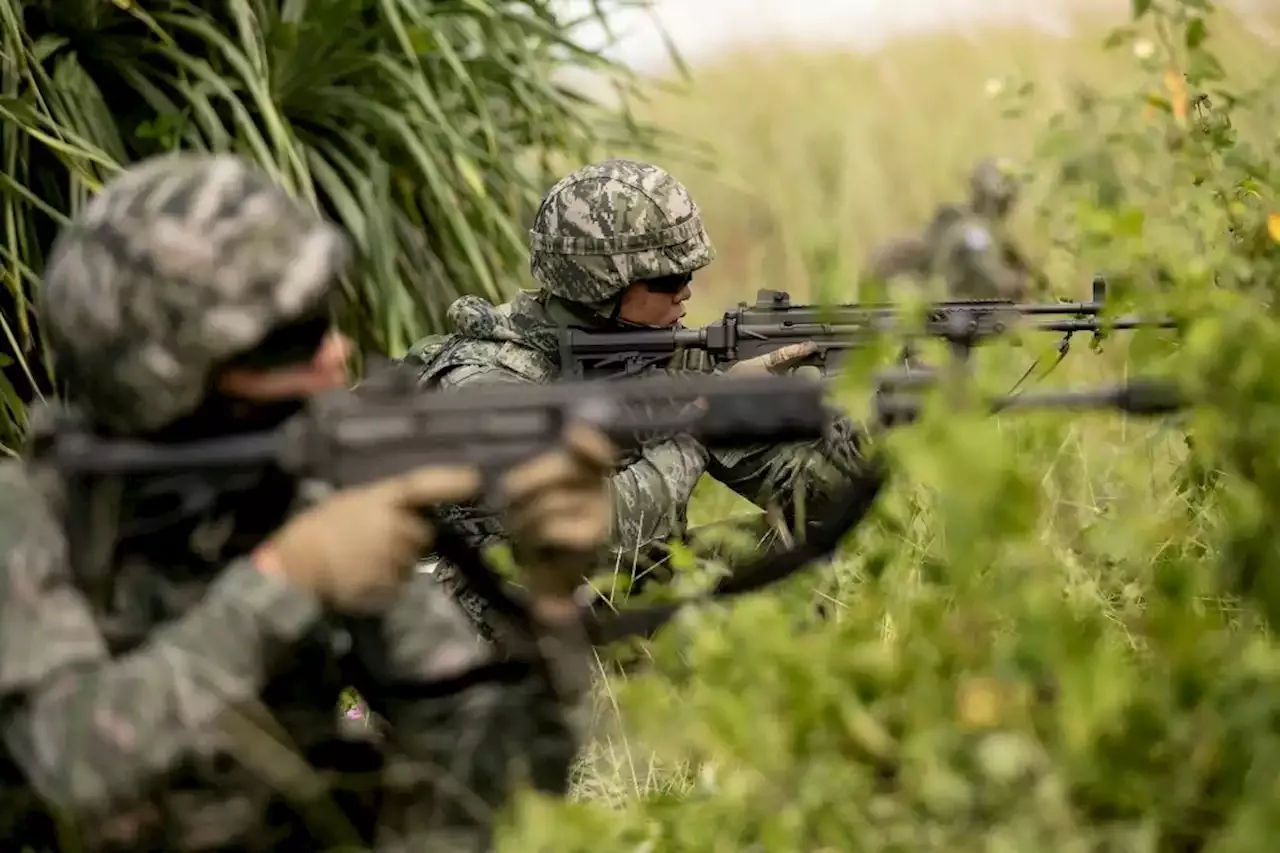 US to spend $66 million on new facilities at Philippine military basesConstruction of the projects in three of five Philippine sites outlined under the Enhanced Defense Cooperation Agreement will start next year, the Department of National Defense says.
Read more »
 Philippine smartphone market shrinks for fifth straight quarter as inflation soarsThe Philippine smartphone market declined for the fifth straight quarter in July to September as vendors chose to clear inventories and inflation hit spending patterns, data released by the International Data Corp. (IDC) on Wednesday showed.
Read more »
 Kamala Harris to visit Philippine islands at edge of South China Sea disputeWASHINGTON --- U.S. Vice President Kamala Harris will visit the Philippine islands of Palawan on the edge of the disputed South China Sea, a senior administration official said on Tuesday, in a move
Read more »